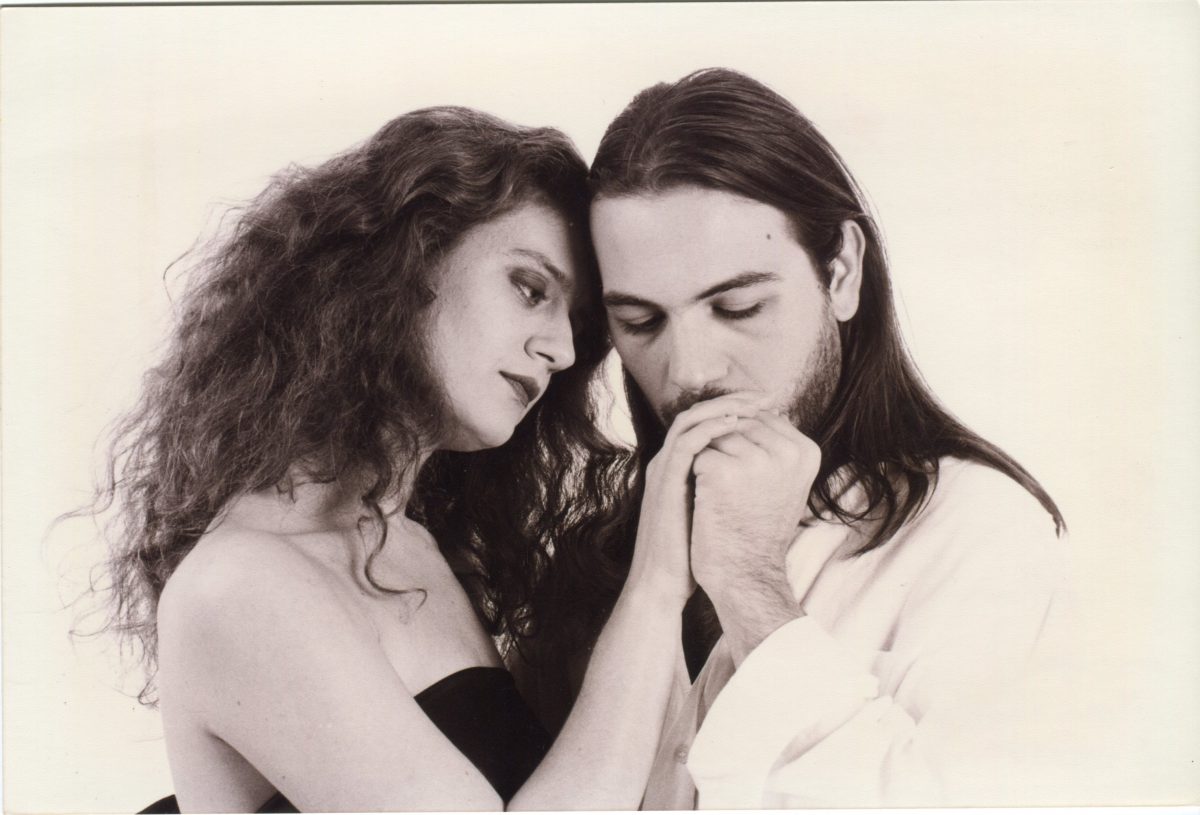
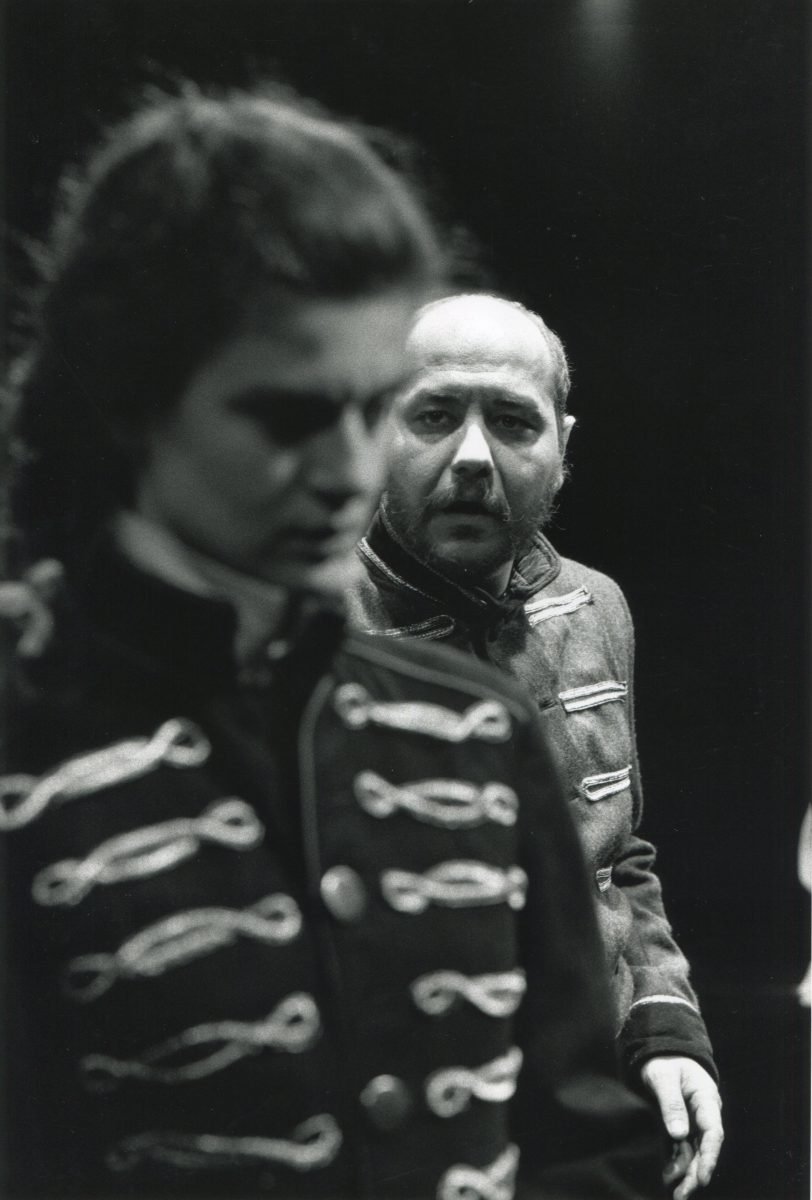
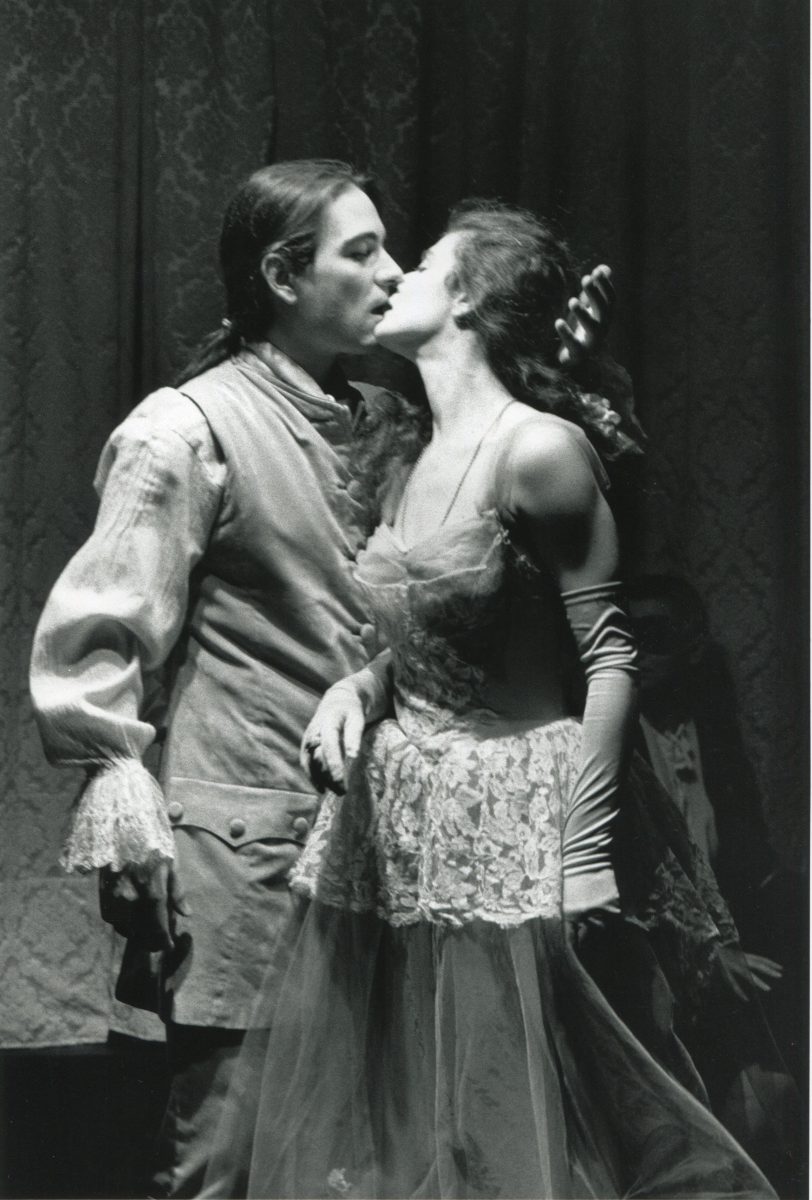
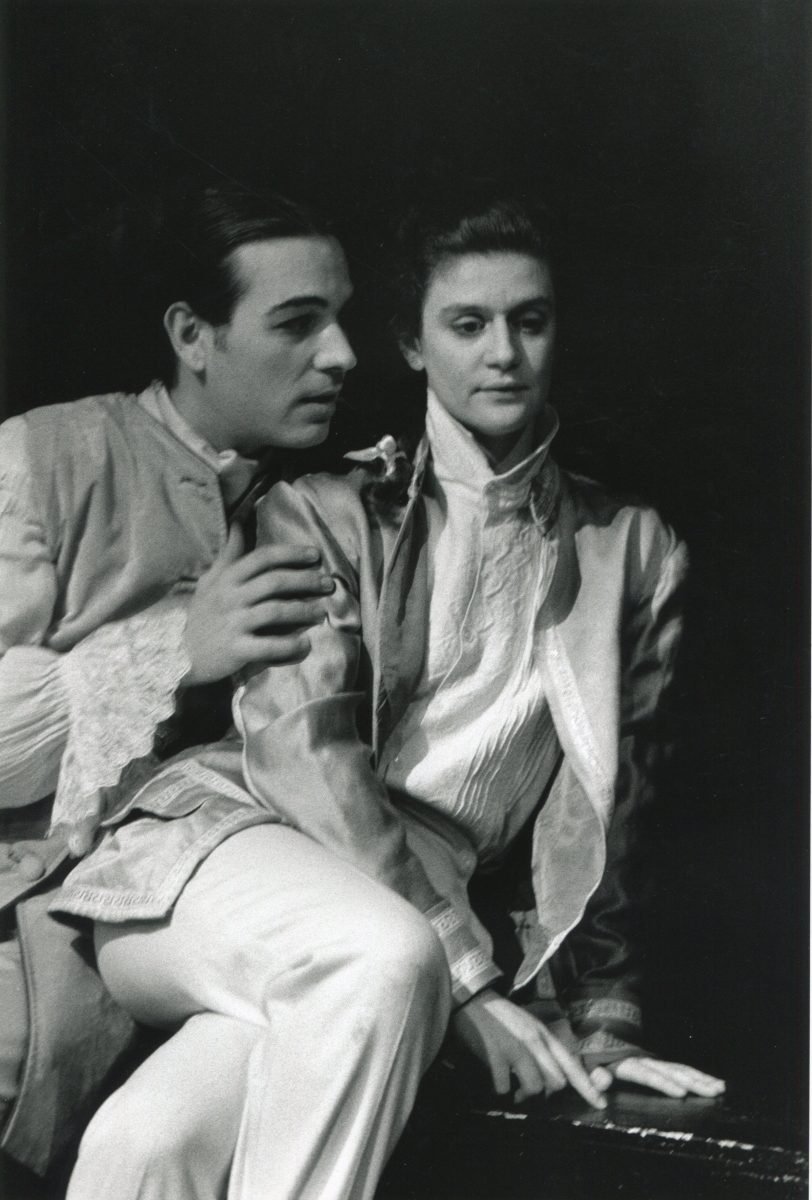
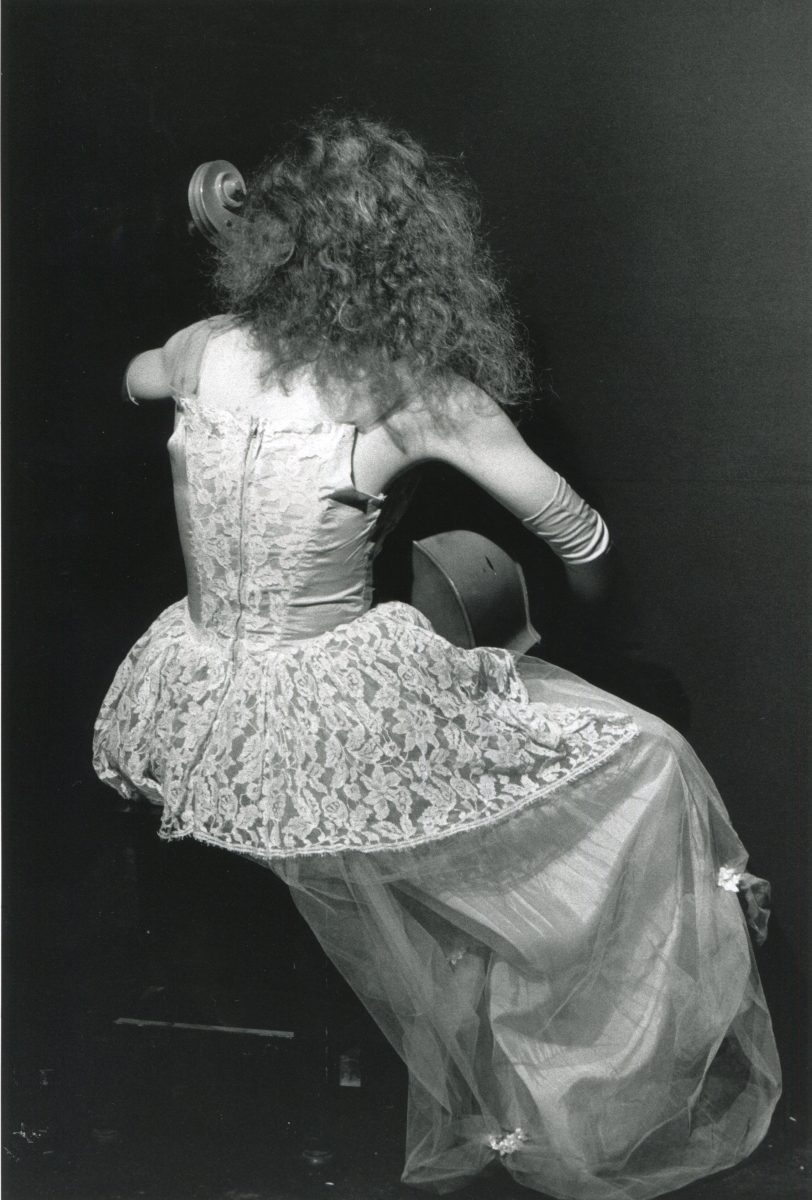

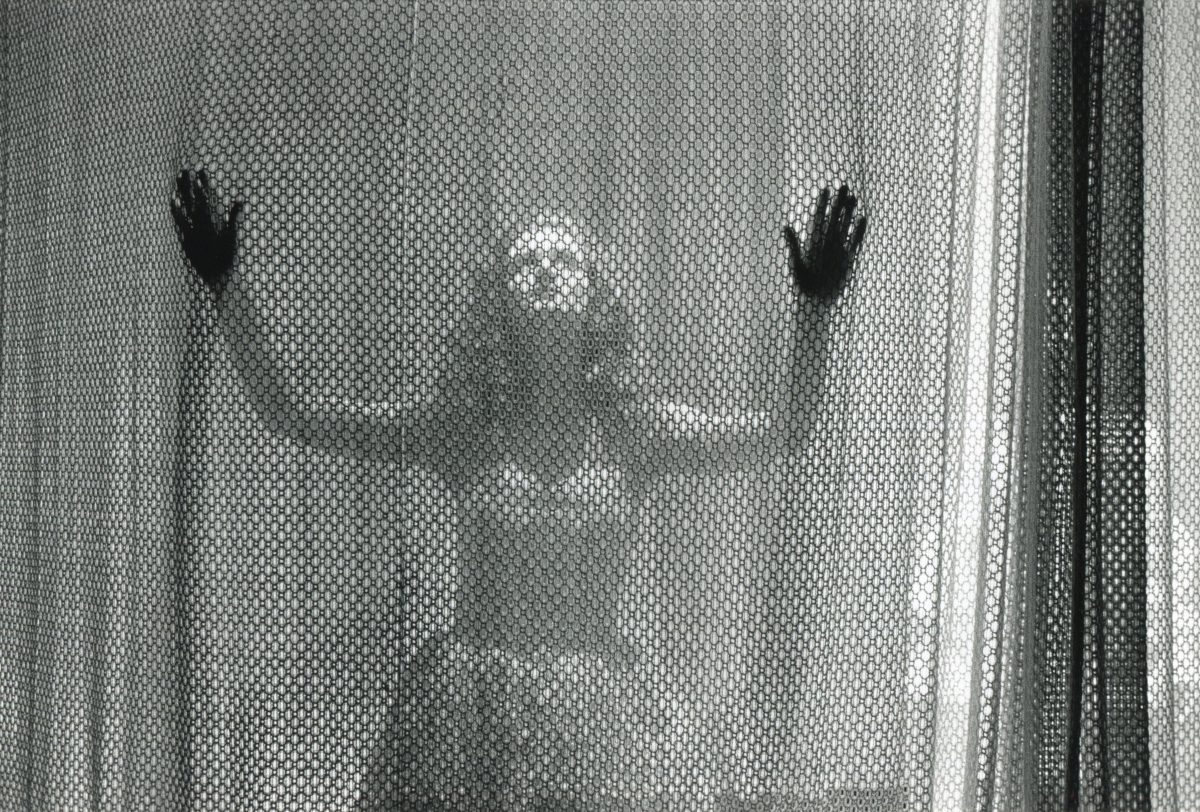
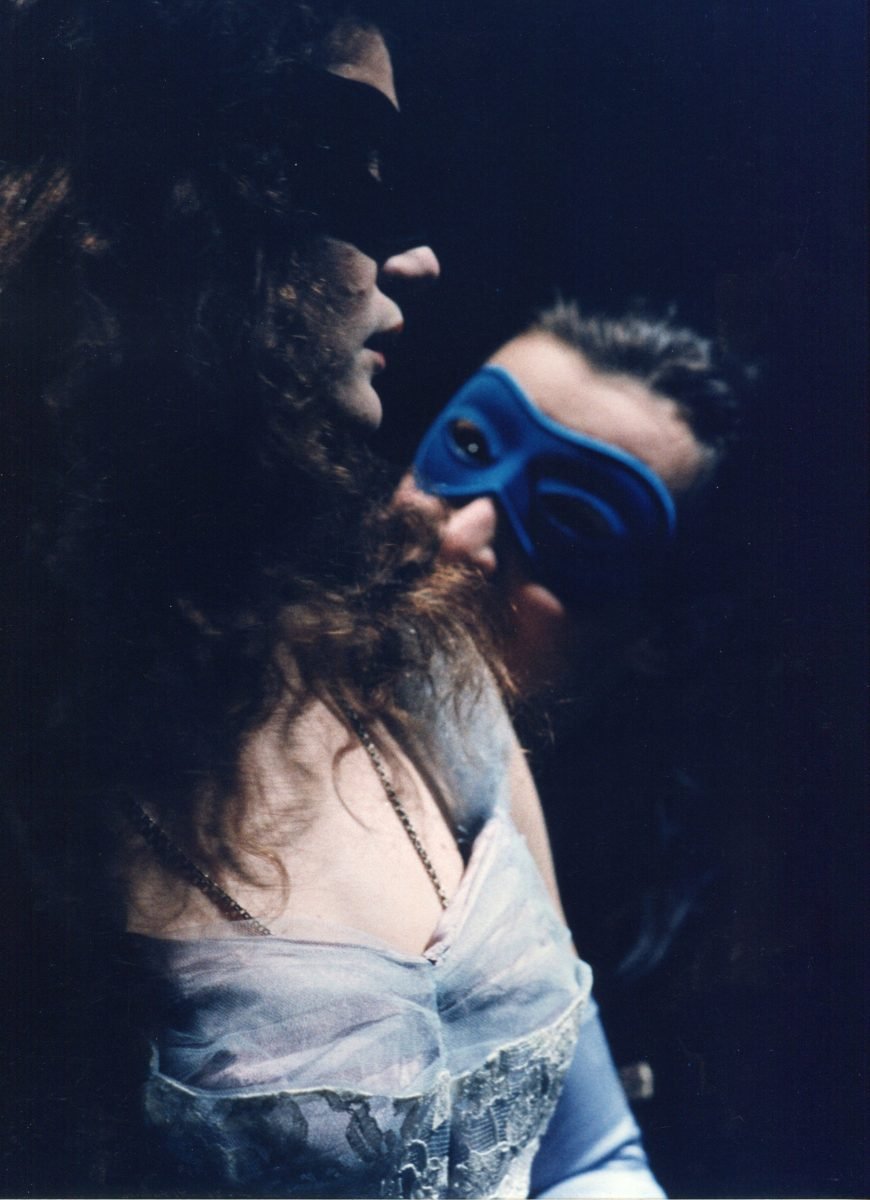
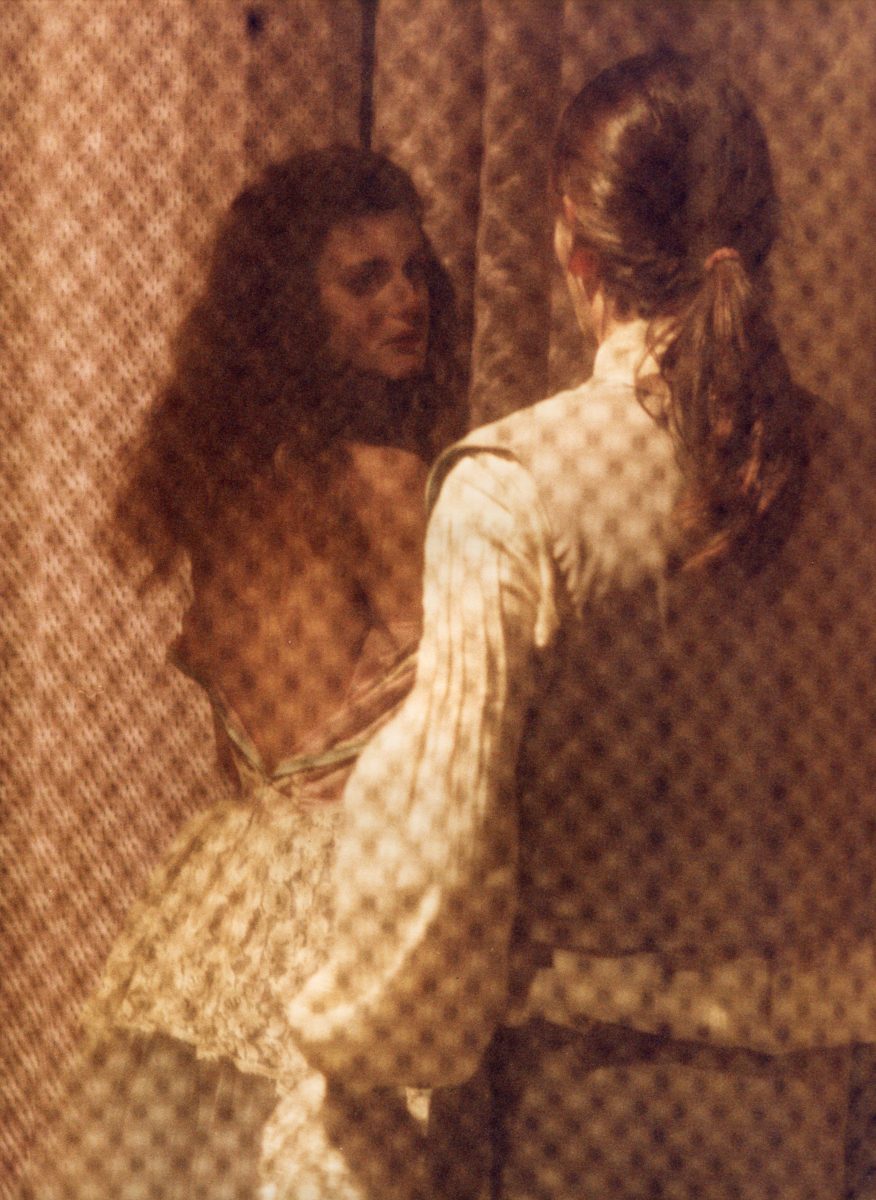

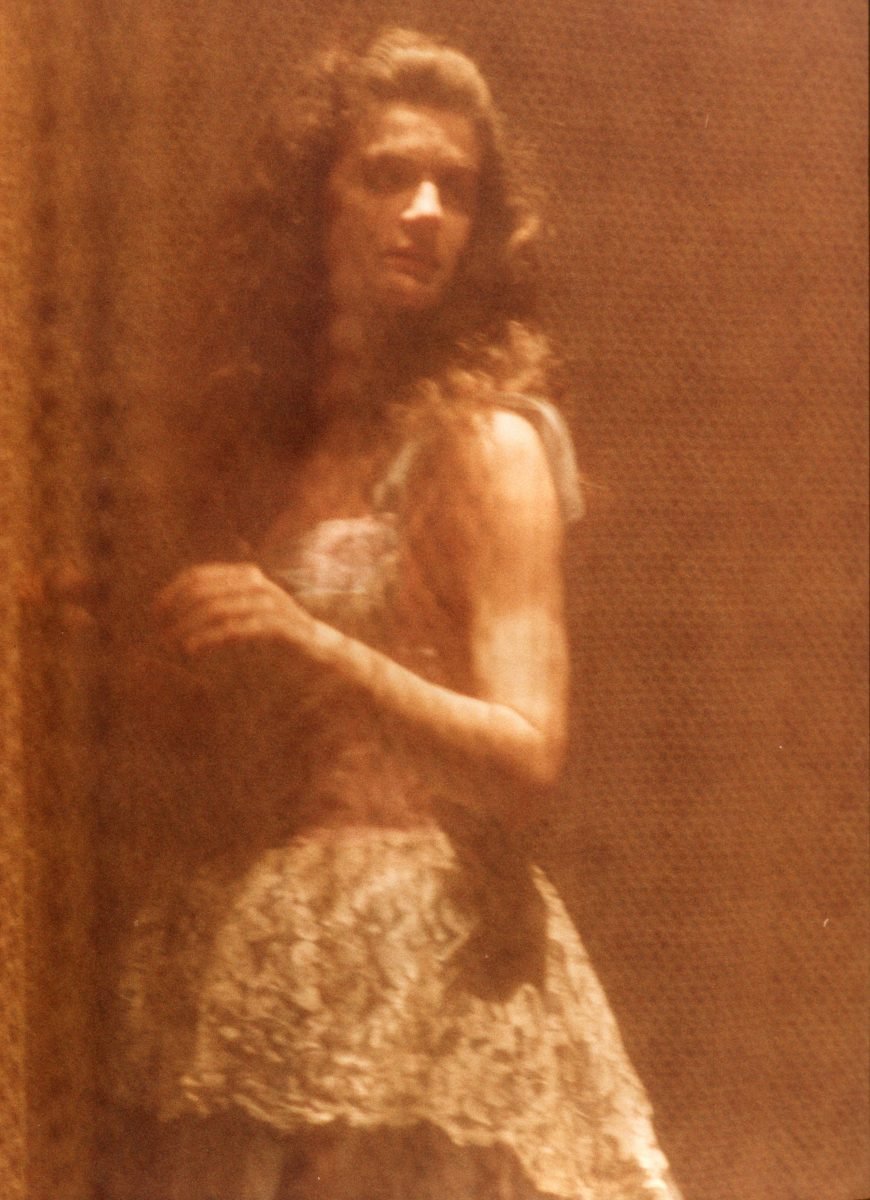
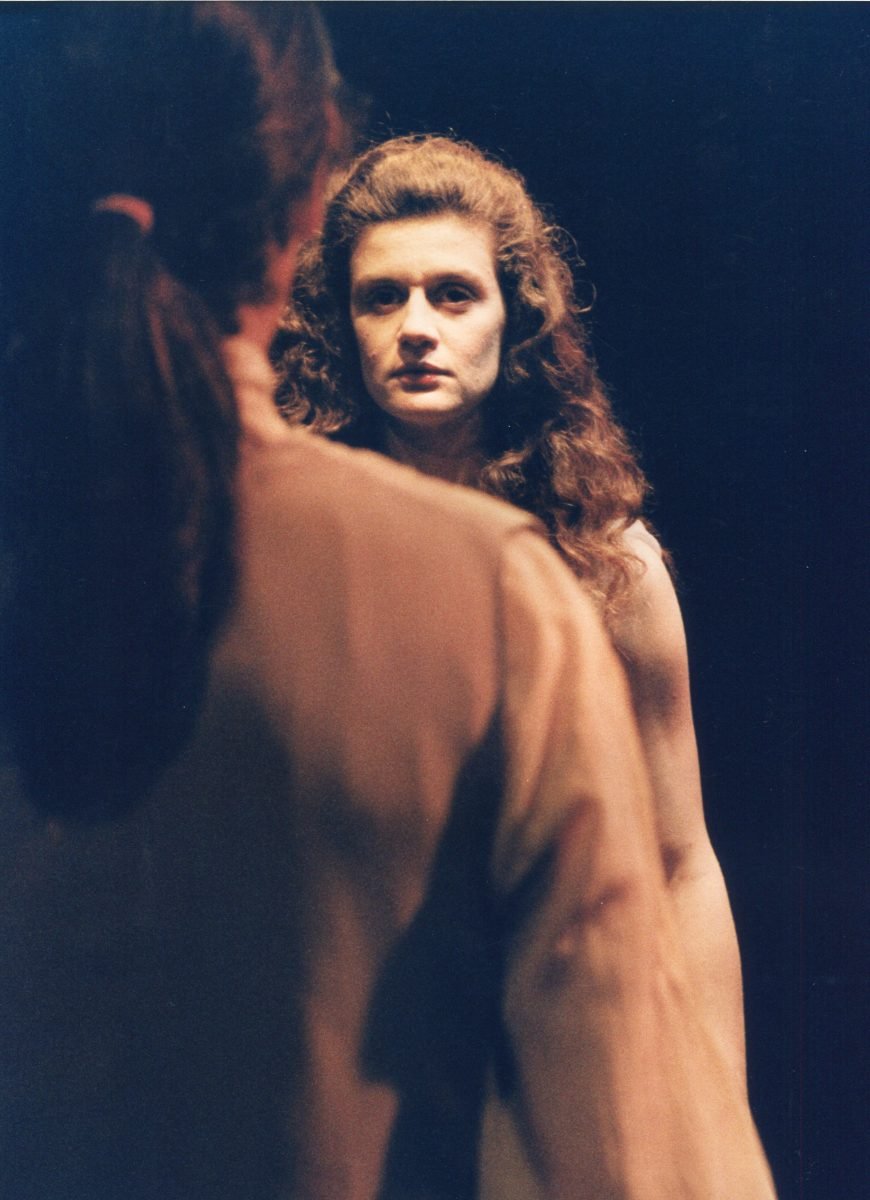
Notos Theatre, Balcony
January 14 – March 2, 1997
The performance was presented at the “Podium 1997” International Festival in Moscow on April 27, 1997.
The motto used by Marina Tsvetaeva in her theatrical masterpiece (despite the fact that the translation of her text cannot preserve the unadulterated beauty of her language and verse, the charm that reverberates is indicative of the author’a poetic magnitude) is “And you will forget Henrietta.”
And this is because it relates to the true love story of twenty-four-year-old Casanova and the mysterious Henrietta, who appeared in his life unexpectedly, conquered him with her spirit and beauty, and lived with him for a few months before disappearing forever – after previously making him swear never to search for her and to pretend that they were strangers if they were ever to meet by chance. He etched the words “And you will forget Henrietta” on the window of their hotel room with the diamond he had given her. Did Casanova forget Henrietta, or did he also lose himself while searching for fragments of her in every one of the hundreds of women that he encountered on his path thereafter?
Tsvetaeva divides her work into five scenes. The first meeting of the couple, their love affair, its climax, and their separation are depicted in the first four scenes.
However, with her demonic imagination, she adds a fifth. “It starts”, says director Stathis Livathinos, “with the following poetic stage direction: ‘Casanova and his thousandth and first lover enter the space like a storm.’ It is astonishing how, after a thirteen year time jump, Casanova finds himself in the very same room where he could never let go of Henrietta, accompanied by his thousandth and first – not even his thousandth – lover. He doesn’t recognise the place, but the girl spells out the inscription on the window: “And you will forget Henrietta”. Then the hero goes mad, screaming and breaking the glass, but it is too late. Too often in our lives, you see, it is already too late. And that is a key element of human tragedy.”
14-15.12.1996, Marina Kaltalki, “A Russian poet meets Casanova in Athens”, Ependytis Newspaper
Translated by: Leonidas Karatzas
Directed by: Stathis Livathinos
Set & Costume Design: Angelos Angeli
Music: Nikos Platanos
Lighting Design: Alekos Anastasiou
Assistant Director: Marianna Kolovou
Lighting & Sound Operator: Pavlos Chatzipavlou
Cast:
Marianna Kolovou, Nestoras Kopsidas, Despina Kourti, Alexandros Logothetis, Anna Mascha, Themis Panou, Akis Vloutis
The regular professors of the Russian Institute of Theatre Arts Irina Promptova and Nikolai Karpov also worked with the cast.