


“Dolichos” Theatre Company
Originally presented from April 19 to May 28 2000 at the Apo Michanis Theatre.
Reprised from December 6, 2000 to January 28, 2001 at Poreia Theatre.
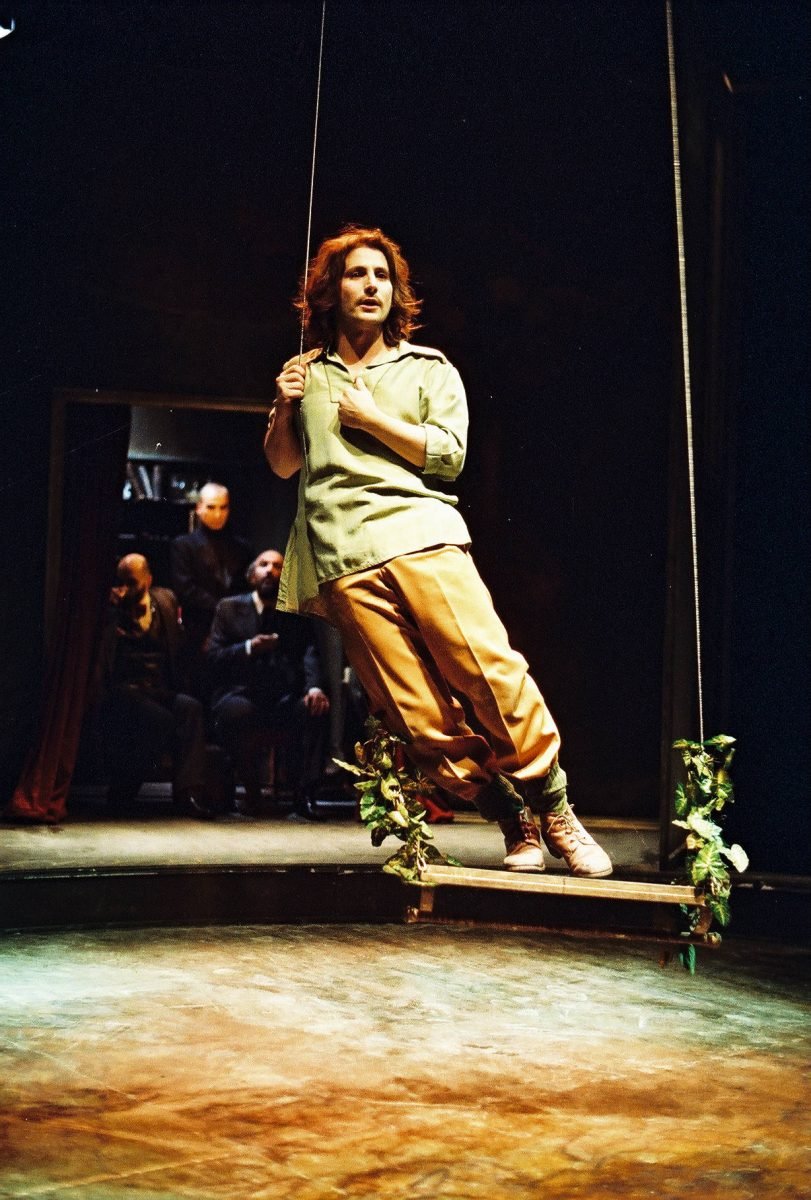
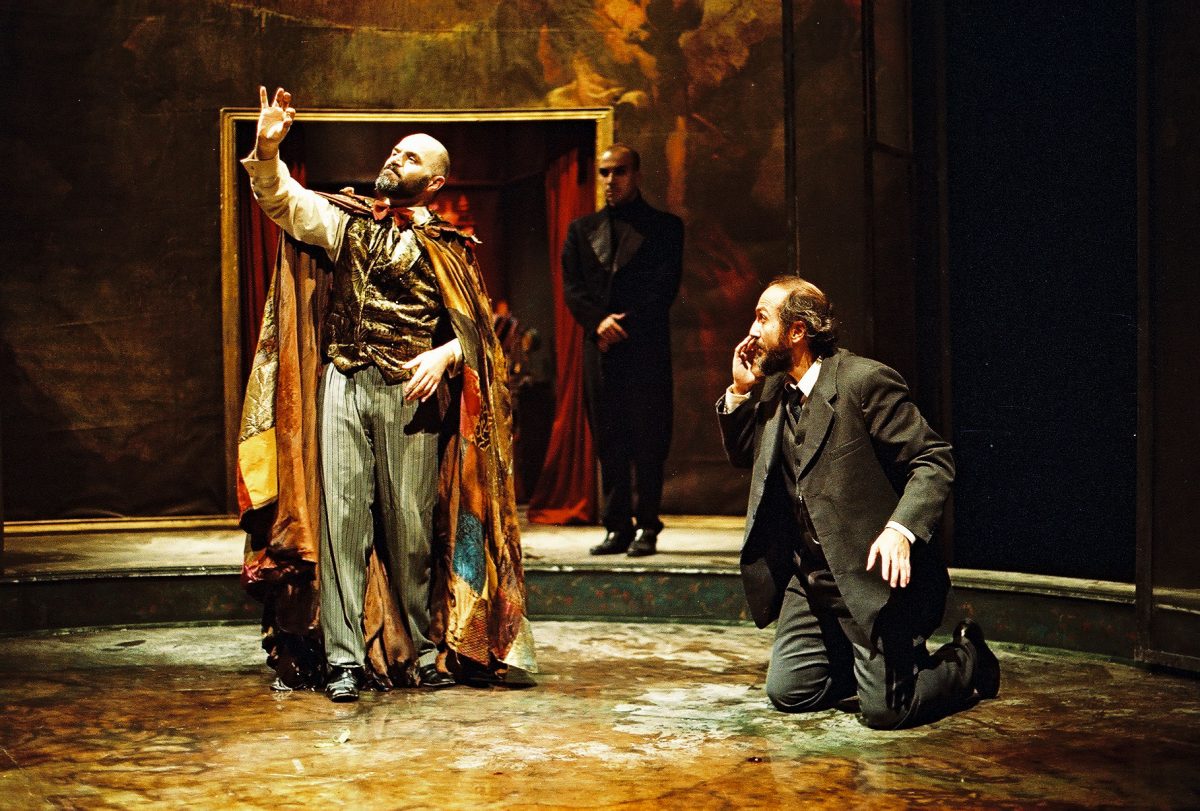
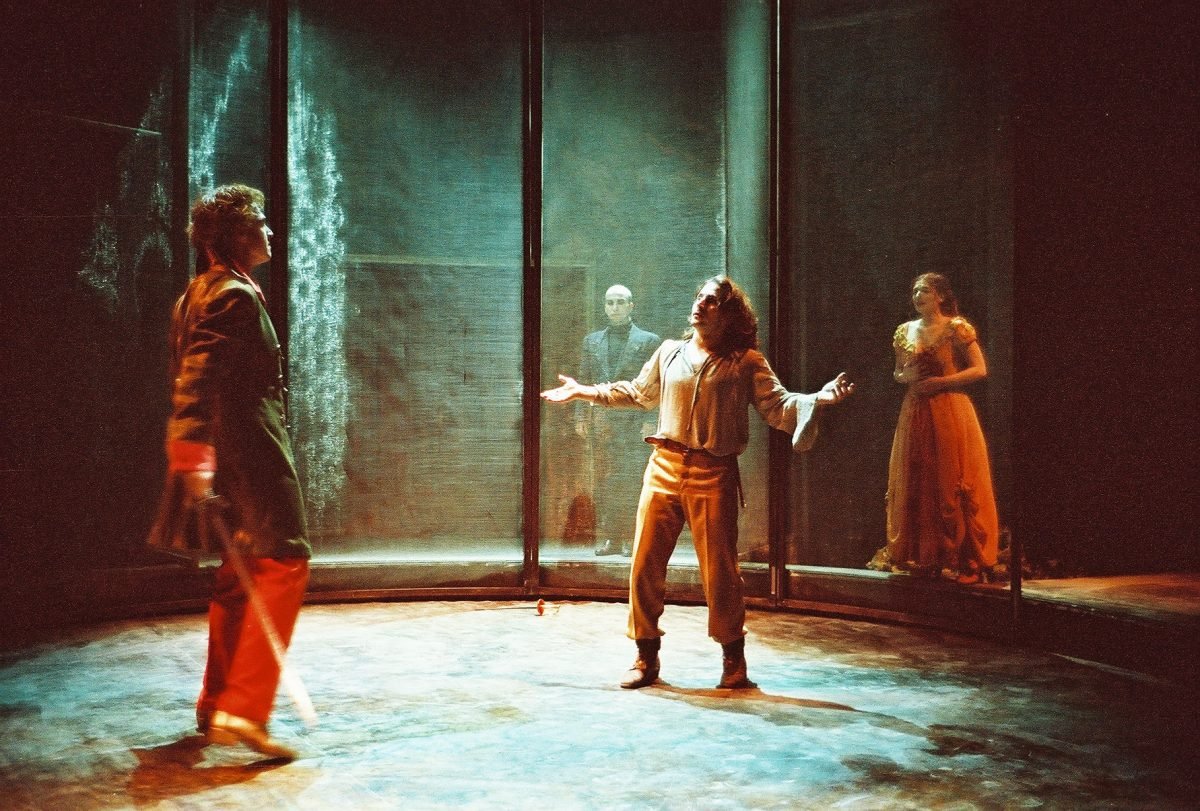
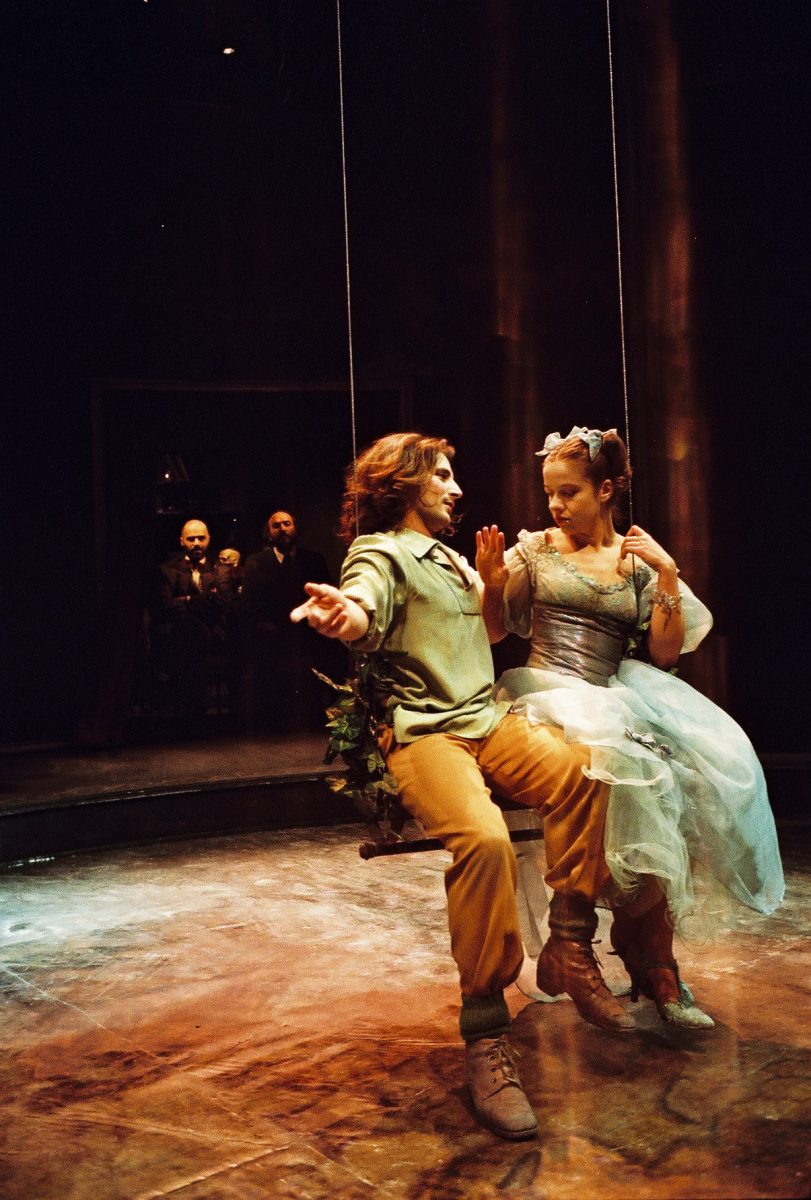
[…] Pridamont, a lawyer from Avignon seeks news of his son, who has been missing for 15 years, eventually finding the magician Alcandre, who lives in a cave with his servant Amanuensis. Alcandre brings to life three visions before the astonished Pridamont, depicting his son caught in three different love affairs, always involving the same two women, a lady and her servant, always with the same “villainous” rival and the same smitten adversary. The depiction of the world in these three visions becomes progressively darker. In a mysterious manner, the names of the two women and the three men participating in the visions, as well as the setting, change from one vision to another, while the son is never referred to by his real name, not even outside the visions by his own father.
In the first vision, conceived entirely by Kushner, the son is an ardent, destitute lover, infatuated with Melibea. With the help of her servant, Calisto arranges a meeting with his beloved in her garden.
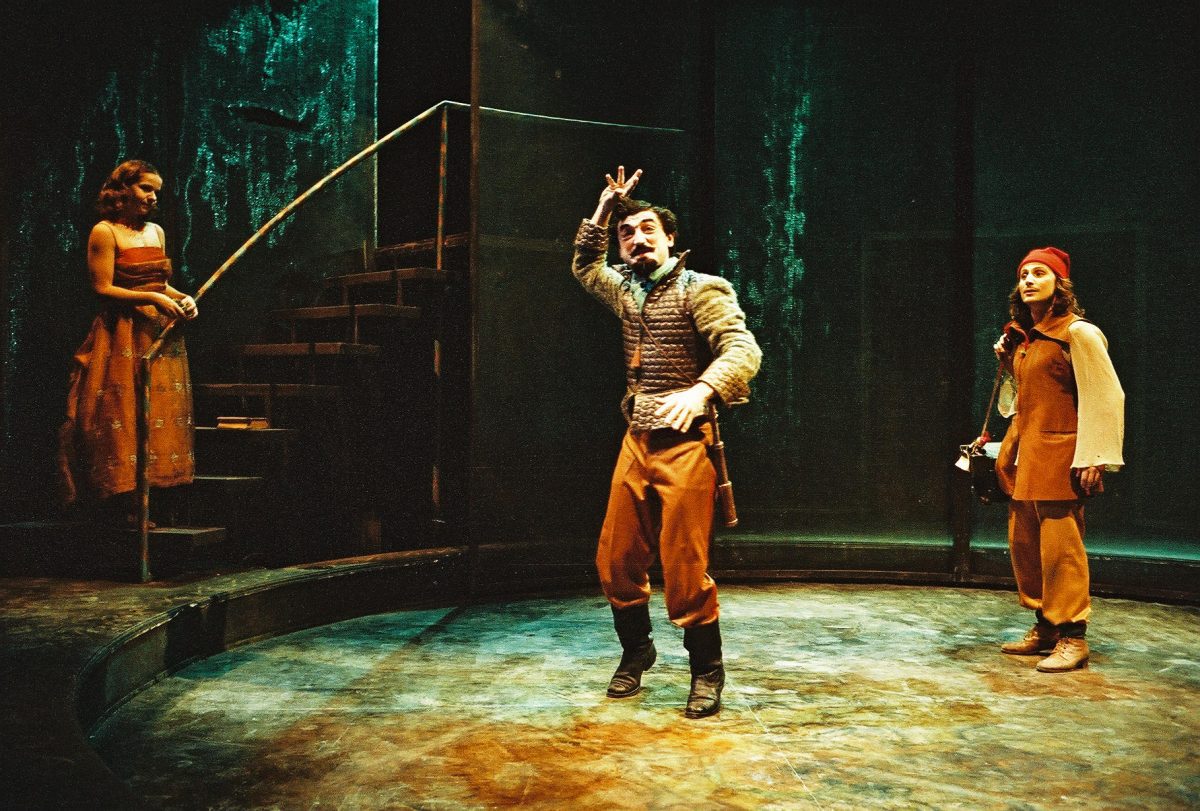
The flow is abruptly interrupted by the second vision, in which the son, now named Clindor, serves as a servant to Matamore, a boastful soldier directly derived from the long tradition of Roman comedy and commedia dell’arte. Here, love becomes entangled with financial interests, and real life intertwines with fantasy, as Amanuensis “transports” himself into the dimension of the vision, embodying the role of the heartless father of Isabelle, Geronte.
Clindor is imprisoned for the murder of his rival Adraste but escapes with the help of Isabelle’s former maid and his own former lover, Lyse, and flees with Isabelle. In the third vision, filled with symbolism, the incurable romantic son is married to Hippolyta but emotionally involved with the princess, leading to his murder by her husband. Faithful to her youthful love, Hippolyta dies alongside him.
Pridamont then learns that everything he has just witnessed is no more than a theatrical performance, a deception, an illusion. His son is an actor in Paris. After a poignant, beautifully crafted monologue on love by Alcandre and another in which Pridamont speaks of the transience of theatrical art, while actually referring to the fleeting nature of existence, the lawyer leaves the cave, relieved but uncertain if he will ever see his son again. The play concludes with Matamore, who, having escaped the realm of fantasy, wanders through the now desolate scenery, searching for the path to the moon, revealing the fluidity of boundaries between theatre and reality, where the greatest deception is love and the most precious gem that can be obtained are the tears of a receptive viewer. […]
Source: Poreia Theatre
Translated by: Stratis Paschalis
Directed by: Stathis Livathinos
Set & Costume Design: Eleni Manolopoulou
Music: Haig Yazdjian
Lighting Design: Alekos Anastasiou
Fight Choreography: Thanos Dermatis
Assistant Director: Eri Kyrgia
Cast:
Pridamont of Avignon, a Lawyer: Yannis Dalianis
The Amanuensis, servant to Alcandre / Geronte, father of Isabelle: Nikos Kardonis
Alcandre, a Magician: Nikos Hatzopoulos
Calisto / Clindor / Theogenes, son of Pridamont: Dimitris Tarlow
Melibea / Isabelle / Hippolyta, beloved / wife of C /C / T: Angeliki Papathemeli
Elicia / Lyse / Clarina, maid / friend of M / I / H: Natalia Stylianou
Pleribo / Adraste / Prince Florilame, rival of C / C / T: Akis Vloutis
Matamore, a lunatic: Dimitris Imellos
-Best Young Director Award to Stathis Livathinos from the Association of Greek Theatre and Music Critics.
-“Fotos Politis” Award for Best Director of the 2000-2002 season to Stathis Livathinos.
-“Dimitris Horn” Award for Best Performance by a Young Actor to Dimitris Imellos.
-3rd Repertoire Prize from the Association of Greek Theatre and Music Critics.